
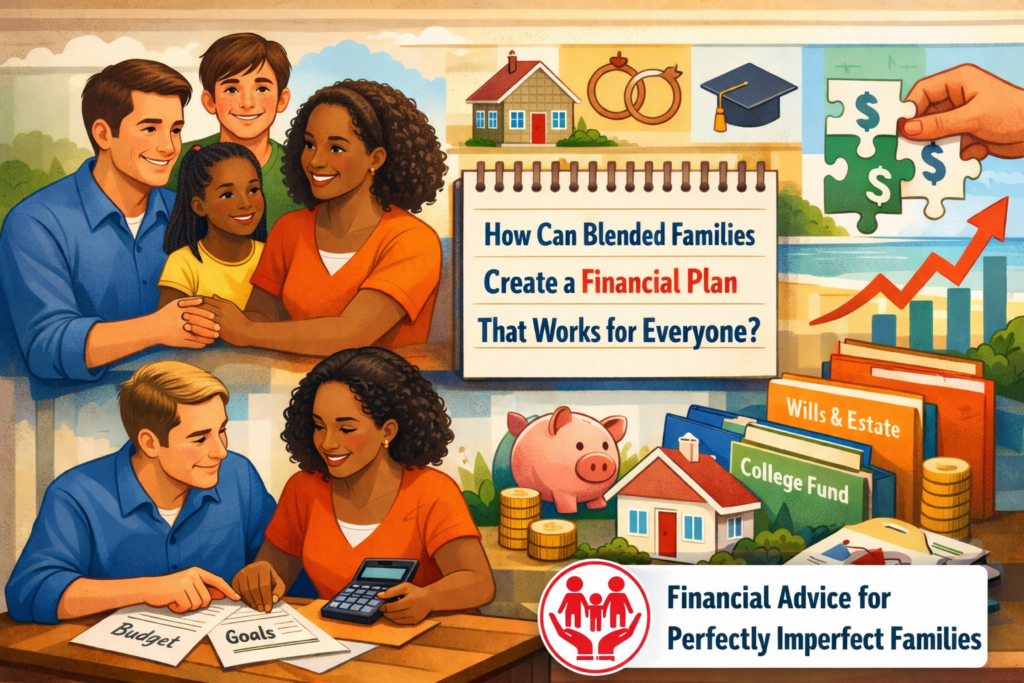
Blended families unite various financial backgrounds, duties, and anticipations. Every member comes home with his or her own goals and commitments, and hence, financial alignment is needed. Families develop precision and prevent disputes with the aid of retirement financial planning in NJ and with systematic guidance. Considerate decision-making provided by NJ-certified financial planning means that all the decisions made will be ones that are very fair and long-term stable.
Understanding Financial Complexity in Blended Families
Blended families constitute marrying partners, offspring of the former relationships, and occasionally dependents. Every tier presents monetary demands like child support, schooling, and inheritance anticipations. Families should be able to accept these realities beforehand in order to prevent misunderstandings in the future.
Planning is based on clear communication. Both partners should share financial priorities and concerns. Transparency assists in determining the common areas and goals that may need compromising.
Setting Shared Financial Goals
Any financial plan that succeeds has well set goals. Blended families should be able to find short-term and long-term priorities.
Some of the short-term objectives could be to control household costs, save an emergency fund, and settle debts. The long-term goals usually involve retirement, funding education, and wealth transfer.
Couples should re-examine these goals on a regular basis. The financial priorities change with the development of children and the changing conditions.
Creating a Fair Budget Structure
There must be fairness and flexibility in budgeting blended families. The partners might not make the same contributions depending on their income, obligations, and responsibilities.
Families can opt to have a joint account that they use to cover common expenses but have an individual account that they use in their personal spending. This arrangement is conducive to independence, and at the same time, household requirements are addressed.
A clear budget alleviates stress and gives everybody some form of accountability.
Merging Finances When You’re Still Untangling the Past
Most blended families aren’t starting from zero. They’re starting from two separate financial histories that now have to work together. That usually means three things need to be addressed directly, not assumed away.
Spousal and child support from a prior relationship. These are legal obligations, not optional line items, and they need to be built into the new household’s budget from day one rather than treated as a temporary drain that will “sort itself out.” A plan that ignores them tends to unravel the first time a payment is due and the money isn’t set aside.
Children from more than one relationship. Fairness here doesn’t mean identical treatment. A teenager two years from college and a toddler have very different near-term needs, but it does mean the family should be able to explain its reasoning if asked. Documenting how education funding, allowances, or gifts are handled across all the children in the household heads off a lot of resentment later.
Property and assets brought into the marriage. Whether a home, retirement account, or inheritance was owned before the relationship began matters both financially and legally. Decisions about what stays separate versus what becomes shared are usually easier to make calmly, before the wedding, than to untangle later.
None of this has to be resolved in one conversation. But naming these three areas specifically, rather than folding them into a vague “let’s merge our finances,” is usually what separates a blended-family plan that holds up from one that quietly falls apart under its first real test.
Managing Existing Financial Obligations
Blended families are usually burdened with debt resulting from past relations. They can be alimony, child support, or the mutual properties.
These obligations must be discussed by the partners. The neglect of them causes strain and failure of planning. A systematic audit will help in ensuring that the current duties are in line with the current financial capacity.
These requirements need to be structured by professional advice on NJ-certified financial planning and ensure that they do not interfere with the future aspirations of the families.
Planning for Children and Education
In blended families, children are still at the center stage. Budgeting must take care of education, medical care, and physical health.
Parents might be forced to make a contribution to children in multiple relationships. An open agenda will provide equality and prevent confusion.
Long-term goals are supported by education savings plans, trusts, and structured investments, which keep the family clear.
Building a Strong Estate Plan
Blended families need estate planning as an essential factor. Assets might not be transferred as planned without a clear plan.
The families should identify beneficiaries, create trusts, and revise legal records. This is a process that provides proper support to the partners as well as children.
Estate planning also lowers the chances of conflicts and ensures harmony in the family.
Protecting the Family with Insurance
Insurance is important with regard to financial security. The life insurance, disability coverage, and the long-term care planning safeguard the family members against the risks that were not anticipated.
Each of the policies must demonstrate the special arrangement of the blended family. The coverage decisions must take into account the dependents, replacement of income, and future expenditure.
The financial resilience is enhanced with a properly designed insurance plan.
Retirement Planning for Blended Families
In blended families, there is a need to be careful coordination in retirement planning. The partners might have varying amounts of savings and expectations when getting into a relationship.
Retirement plans and income plans should be synchronized between couples. A middle ground will see the two spouses become financially independent without sacrificing family needs.
The need to work with people who have been involved in retirement financial planning gives sanity and assists the family to make complex decisions with confidence.
Handling Emotional and Financial Balance
Money matters in a blended family are usually emotional. The variations in parenting styles, spending, and expectations can cause tension.
Families should be empathetic and patient towards planning. Open discussions and respect for each other enhance decision-making and minimize conflict.
Team spirit will make sure that financial plans will help to build relationships instead of burdening them.
Working with a Financial Professional
Financial planning is given structure and expertise through the help of a professional. Advisors assist families in finding risks, maximizing strategies, and being accountable.
A seasoned counselor is aware of the issues surrounding blended families and is able to provide customized solutions. This assistance allows families to attend to long-term goals with ease.
Aligning Financial Values Across Households
Blended families tend to introduce other financial habits and beliefs into a common platform. Both partners might have a different saving, spending, and investment strategy. These variations must be brought into close proximity so as to prevent misinterpretation. Open discussions aid in establishing common values that are used in making financial choices.
Families have to come to an agreement regarding priorities like lifestyle, savings, and long-term commitments. There is a sense of clarity that minimizes friction and creates trust. With the alignment of values, financial planning turns out to be more coherent and meaningful. This position helps to maintain stability throughout life. For the broader framework this fits into, see our complete guide to goals-based financial planning for New Jersey families.
Creating a Flexible Financial Review System
A financial plan is supposed to be progressive as the family dynamics change. Some of the transitions that occur in blended families include a change of career, education, or the dependents. Periodic reviews can be used to maintain the relevance and effectiveness of the plan.
Families should plan the check-ins to review the progress and change the strategies. These reviews assist in creating gaps and areas of improvement. A flexible system will enable the families to cope with the changes without derailing long-term objectives. Financial confidence is enhanced by regular checks and balances and ensures that all people stay on track towards common goals.
Conclusion
Blended families achieve financial stability through clarity, communication, and structured planning. Each decision needs to balance fairness with long term goals. With expert support in retirement financial planning in NJ, families create strategies that protect relationships and build lasting security.
Perfectly Imperfect Families stands ready to guide you through every step of your financial journey.
Frequently Asked Questions
What makes financial planning different for blended families?
Blended families are dealing with various financial obligations and demands, and this needs proper communication and order planning.
How often should blended families review their financial plan?
Families should revise their plan every year or when significant changes in their life occur to keep the plan in line with the new objectives.
Why is estate planning important for blended families?
Estate planning is the proper transfer of assets based on the intentions and ascertains possible disputes among the family members.
Do blended families need separate or joint accounts?
Families may choose a mix of both to balance shared responsibilities and individual financial independence.
How does professional guidance help blended families?
Financial professionals provide structured strategies, reduce risks, and ensure decisions align with long-term goals.